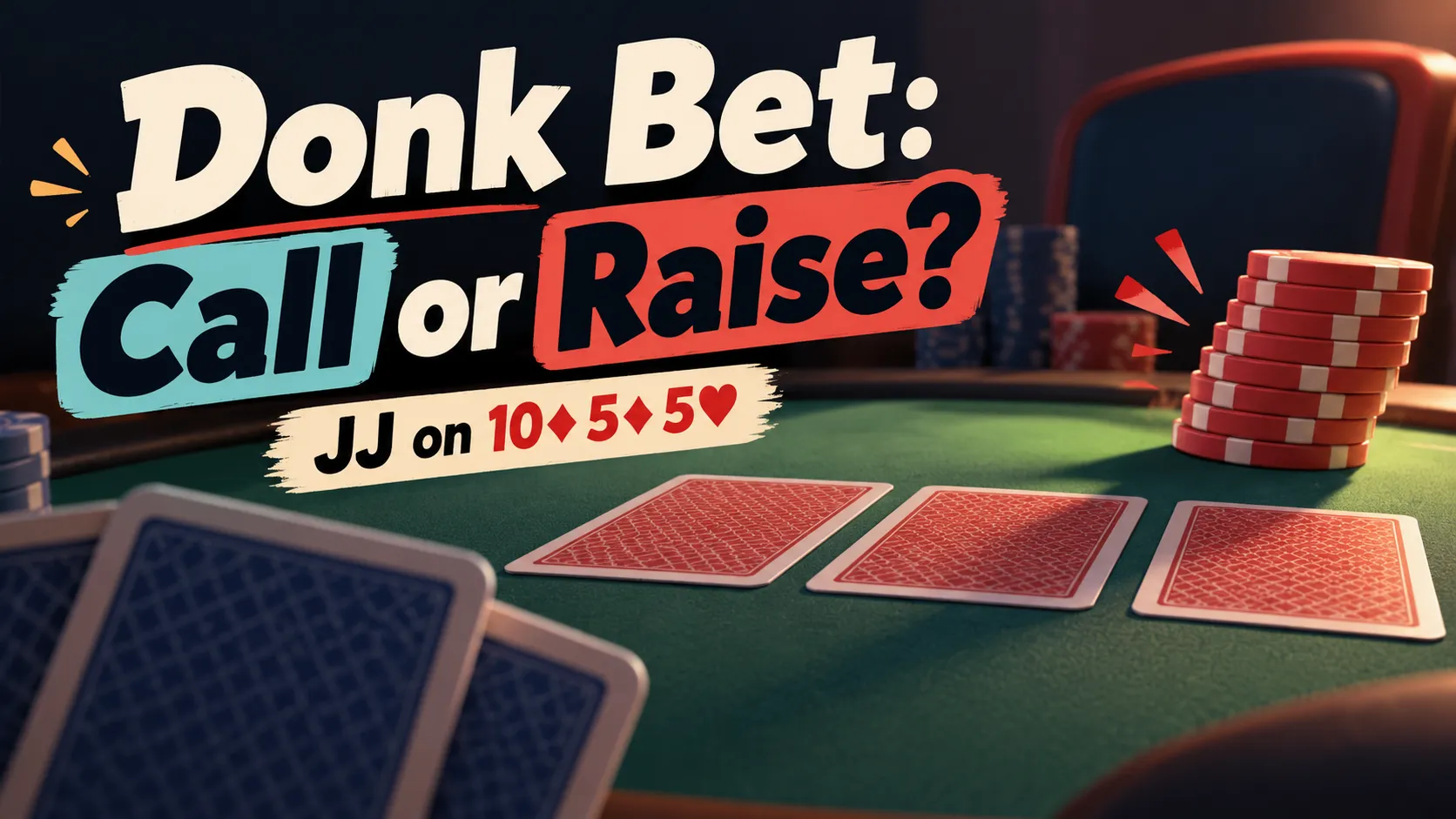
On T♦5♦5♥, the BB can hold more 5x than the HJ, making an overpair a less straightforward raise against a polarized donk-betting range. In a nine-handed final-table simulation with HJ at 20bb and BB at 53bb, GTO Wizard found that the BB had about 38% equity, yet its ICM strategy included 50%-pot leads.
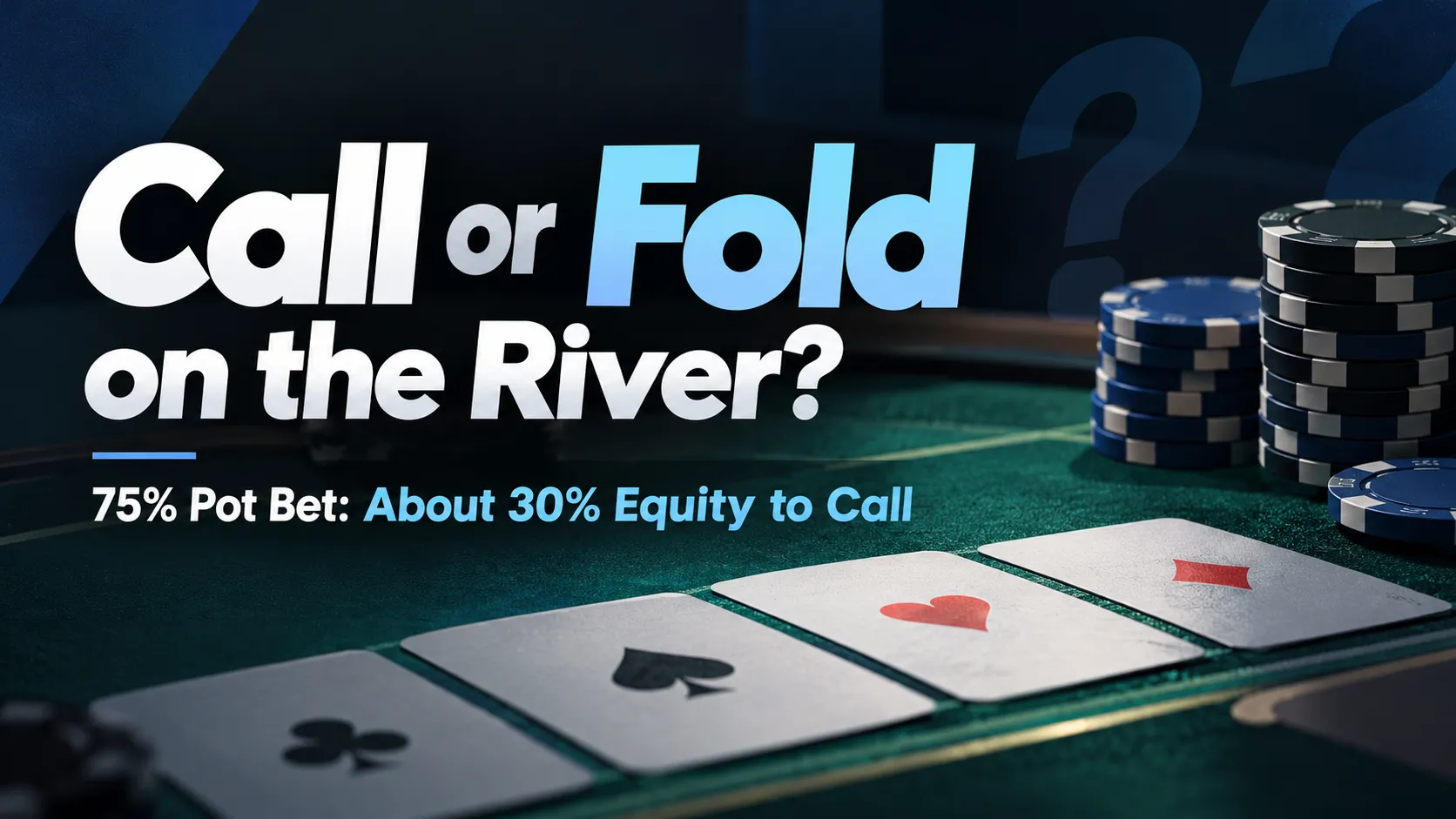
A 16.5bb river bet into 22.1bb requires about 30% equity to call. This bluff-catching example compares A♥9♥ and A♠9♥ to show how missed draws, value hands and blockers affect the decision.
A half-pot river bet requires 25% equity to call when rake and ties are excluded. Using a KJ hand, the article examines how value bets, missed draws and blockers can change whether bluff catching is profitable.
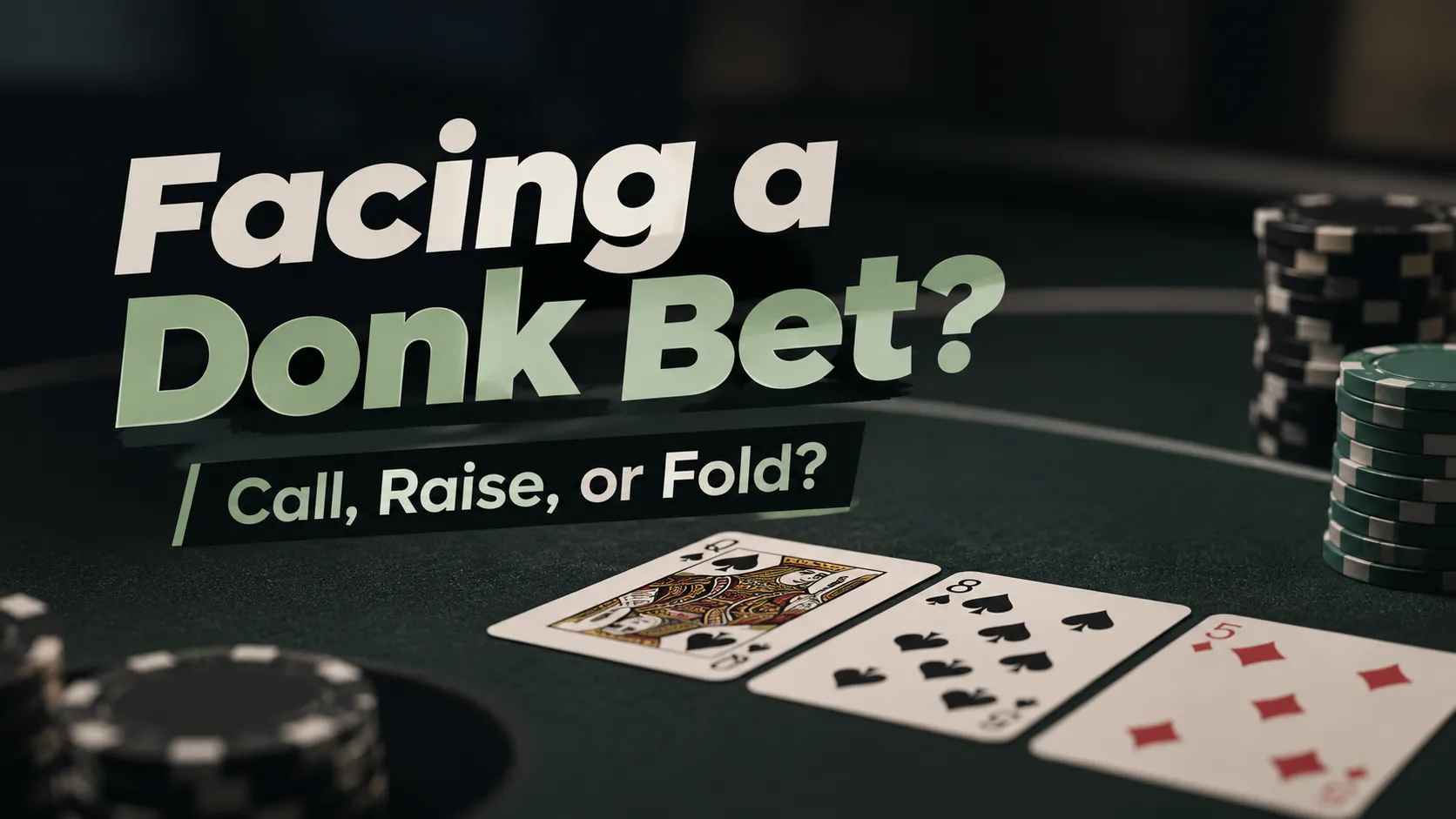
A donk bet on 7♠6♦4♣ deserves a different response from one on A♠K♦2♣. A 100BB example compares top pair, a nut flush draw and ace-high against the same one-third-pot lead on Q♠8♠5♦.
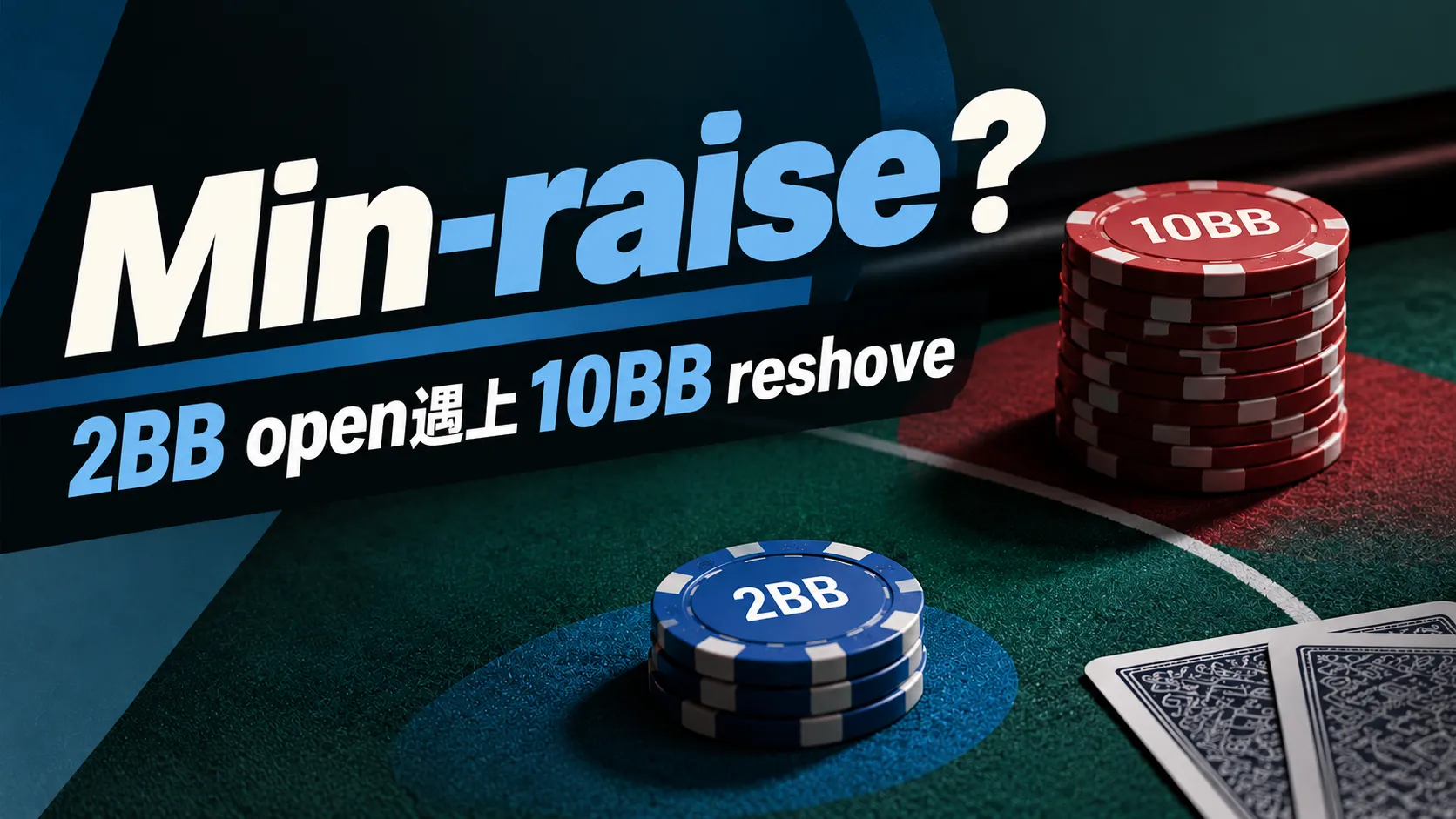
A min-raise against short stacks does not force a shove or fold: with no ante, a 10BB big blind can call a 2BB button open for just 1BB more. If that player shoves to 10BB, the opener needs about 39% equity to call on a chip EV basis, before accounting for ICM.
Slow playing can keep weaker hands and bluffs in the pot, but it can also cost a full street of value when opponents fail to keep betting. This guide breaks the decision down by opponent type, board texture, bet sizing, SPR, position and heads-up versus multiway pots.
Applying a generic poker strategy against recreational players is a quick way to lose chips. Discover how to identify specific leaks and maximize your win rate.
Poker math becomes useful when it answers one question: is this call worth the price? Learn how pot odds, equity, outs and EV work together to make the decision.
Types of Poker Tournaments describe different parts of an event: Freezeout and Re-entry define what happens after busting, Turbo changes blind speed, and PKO adds knockout value. Learn how Satellites, SNGs, MTTs, Deep Stack and GTD fit together so you can read a tournament lobby before registering.
CoinPoker CoinRaces pays $5M every month through cash game leaderboards that reset every 1–2 hours. Micro resets hourly, Low, Mid and High every 2 hours, with qualifying stakes reaching $25/$50.