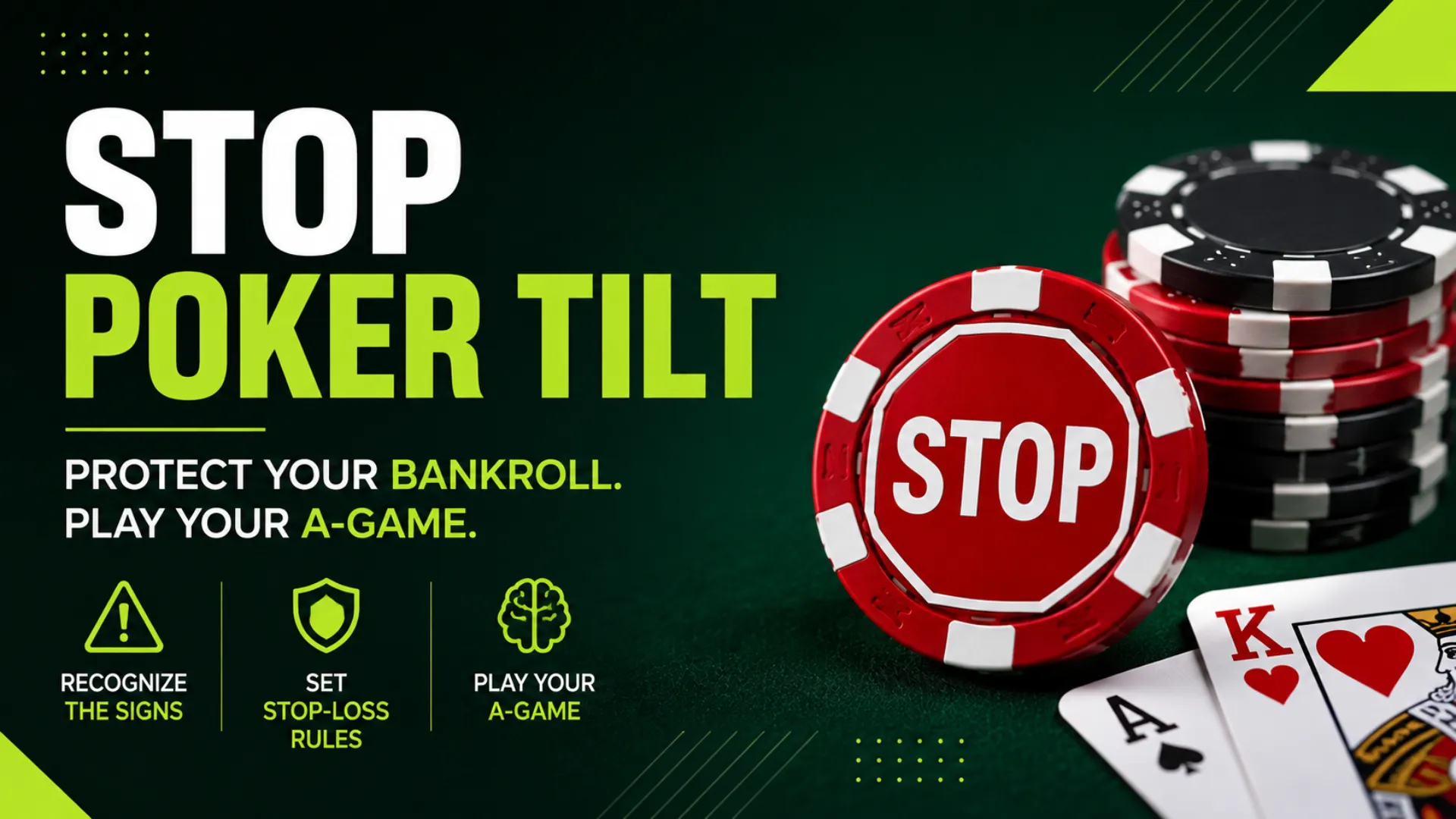
How quickly can tilt turn a winning poker session into a losing one? Sometimes, all it takes is a few emotionally charged hands.
Picture this: you make the right decision on the flop, get your stack in as a huge favorite, and then get rivered by a two-outer. Your chest tightens. Your focus narrows. On the very next hand, you fire off an aggressive 3-bet with a mediocre holding simply because you want the chips back. That is poker tilt, and it can erase hours of disciplined play in a remarkably short time.
GTO solvers and range charts can sharpen your technical game, but emotional control determines whether you can actually execute that strategy under pressure. In this guide, we break down what tilt is in poker, why it happens, how to recognize the warning signs, and how practical stop-loss rules can help protect your bankroll before one bad beat turns into an expensive session.
What Is Tilt in Poker?
Tilt is a psychological state in which emotions interfere with rational decision-making, often causing a player to deviate from their normal strategy and make lower-quality or negative expected value (-EV) decisions.
Tilt does not always look like obvious anger, table-banging, or reckless all-ins. In many cases, it appears through small changes in decision-making that gradually eat into your win rate. Three common forms of poker tilt include:
- Entitlement Tilt: You make what you believe is the correct play, get your money in as a strong favorite, and still lose on the river. The feeling that you “deserved” the pot creates frustration, which can lead to impatience and unnecessary aggression in later hands.
- Revenge Tilt: Your focus shifts from making profitable decisions to beating one particular opponent. After being repeatedly 3-bet, bluffed, or pushed around by a regular, you may start taking marginal spots simply because you want to fight back.
- Desperation Tilt (Chasing): After falling several buy-ins behind, the goal changes from playing well to getting back to even before the session ends. This can lead to wider starting ranges, unnecessary high-variance lines, or moving up in stakes without a sound bankroll reason.
Why Do Poker Players Tilt?
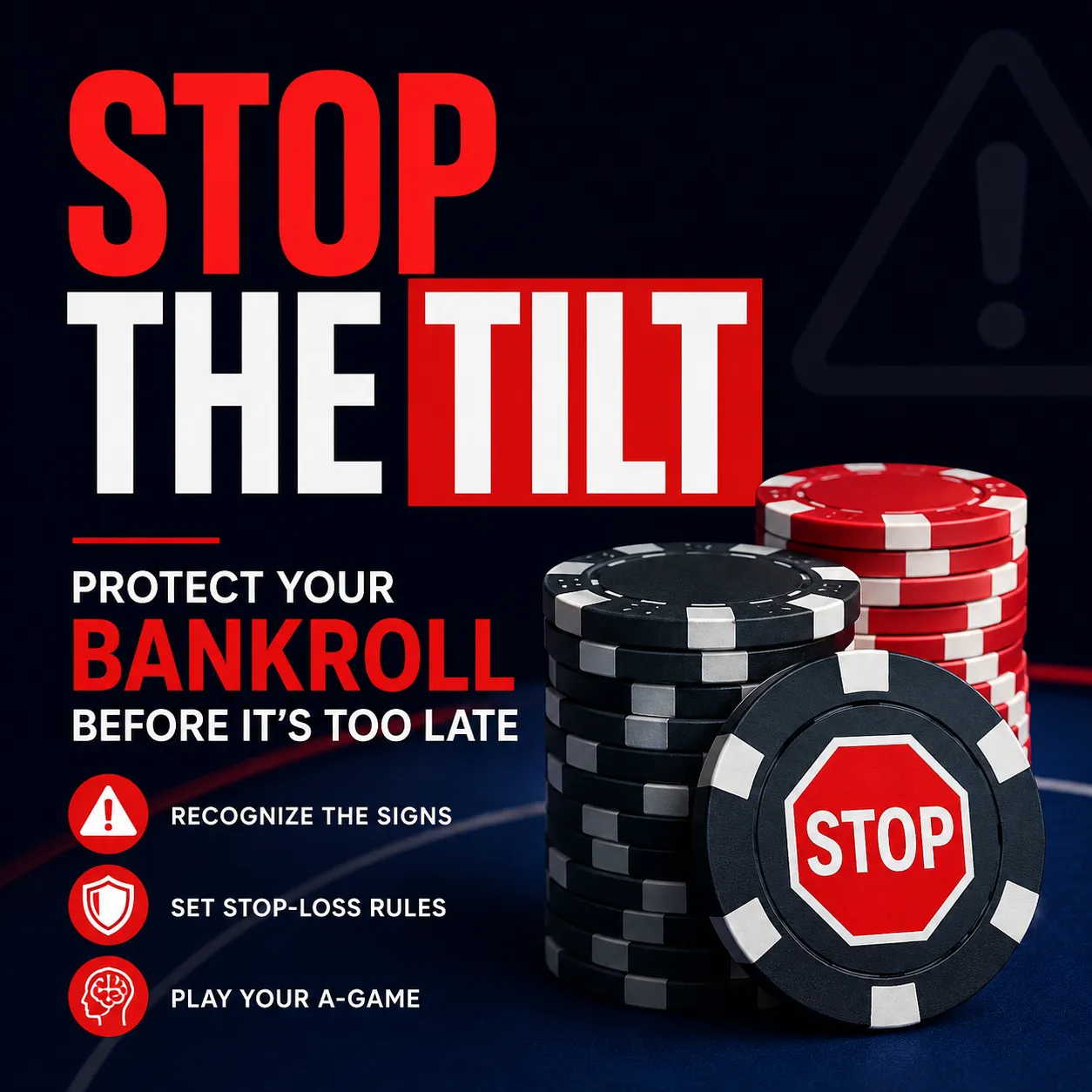
Learning how to stop tilting starts with understanding what causes it. Several factors commonly push players away from their A-game:
- Misunderstanding Variance: Poker is a skill game with significant short-term variance. Even if you are an 80% favorite in a particular spot, you should still expect to lose roughly one out of every five times over a large enough sample. If you emotionally expect the best hand to win every time, normal variance can quickly feel unfair.
- Decision Fatigue: Long poker sessions can create significant mental fatigue. As concentration and self-control decline, it becomes harder to evaluate marginal situations objectively and stick to your normal strategic framework.
- Results-Oriented Thinking: Focusing only on your cashier balance can distort your judgment. A good decision can lose money, and a bad decision can sometimes win. Strong poker players learn to judge the quality of the decision separately from the result of the hand.
How to Stop Tilting and Restore Your A-Game
The key difference between disciplined players and chronic tilters is not that one group never gets frustrated. It is that disciplined players recognize when their decision-making is deteriorating and take action before the damage becomes serious.
1. Set a Clear Stop-Loss or Stop-Session Rule
A stop-loss can be a useful mental-game safeguard, especially if losing several buy-ins tends to trigger emotional decisions. Before the session begins, decide what will cause you to stop playing. For some players, that might be a loss of three buy-ins. For others, the better trigger is noticing clear signs that they have dropped from their A-game to their C-game.
The important part is deciding the rule before emotions take over. If you reach your limit, leave the table rather than trying to force a recovery. A stop-loss does not replace proper bankroll management, but it can prevent a temporary loss from turning into a much larger one because of tilt.
2. Learn to Recognize Your Tilt Triggers
Tilt usually gives you warning signs before your play completely falls apart. You may start betting unusually quickly, checking your account balance after every pot, feeling irritated by a particular opponent, widening your ranges without a strategic reason, or thinking more about recovering losses than making the best decision.
The moment you notice these signals, use the Sit Out function or step away from the table. A short break of five to ten minutes can interrupt the emotional cycle and give you time to reassess whether you are still capable of playing your normal strategy.
3. Focus on Decision Quality, Not Short-Term Results
You cannot control the turn or river. You can only control the decisions you make with the information available at the time.
After a brutal cooler or bad beat, ask yourself a simple question: “If this exact situation happened again, would I make the same decision?” If the answer is yes, the result should not change your evaluation of the play.
You are never guaranteed to recover a particular loss, but consistently making positive expected value (+EV) decisions is what maximizes your long-term expectation. Over a large sample, decision quality matters far more than the outcome of any single hand.
4. Do Not Chase Losses by Moving Up in Stakes
One of the most dangerous forms of tilt happens when a player decides that the fastest way to recover a losing session is to play bigger. Moving from your normal stakes into a larger game simply because you are down can expose your bankroll to even greater swings at exactly the moment when your judgment may already be compromised.
If a higher-stakes game is part of your normal bankroll plan, that is one thing. If you are entering it because you feel an urgent need to win your money back, it is usually a sign that the session should end.
Stop-Loss vs. Bankroll Management: Know the Difference
A poker stop-loss and bankroll management are related, but they are not the same thing. Bankroll management determines what stakes you can responsibly play over the long term. A stop-loss is a session-level rule designed primarily to protect you from continuing to play when your mental state or decision quality has deteriorated.
A strong player may still experience a four-buy-in losing session while making excellent decisions. That does not automatically mean the strategy was wrong. The purpose of a stop-loss is not to eliminate normal variance. It is to prevent normal variance from triggering emotional decisions that create avoidable losses.
Frequently Asked Questions (FAQ)
Looking for a poker setup that better fits your game?
Protecting your mental game is easier when your stakes, bankroll, and playing environment are aligned. Whether you’re looking for games that better match your bankroll, softer fields where you can maximize your edge, or platforms with more favorable rake and rakeback structures, the right setup can make a meaningful difference. Talk to the PokerOffer team to explore your options.