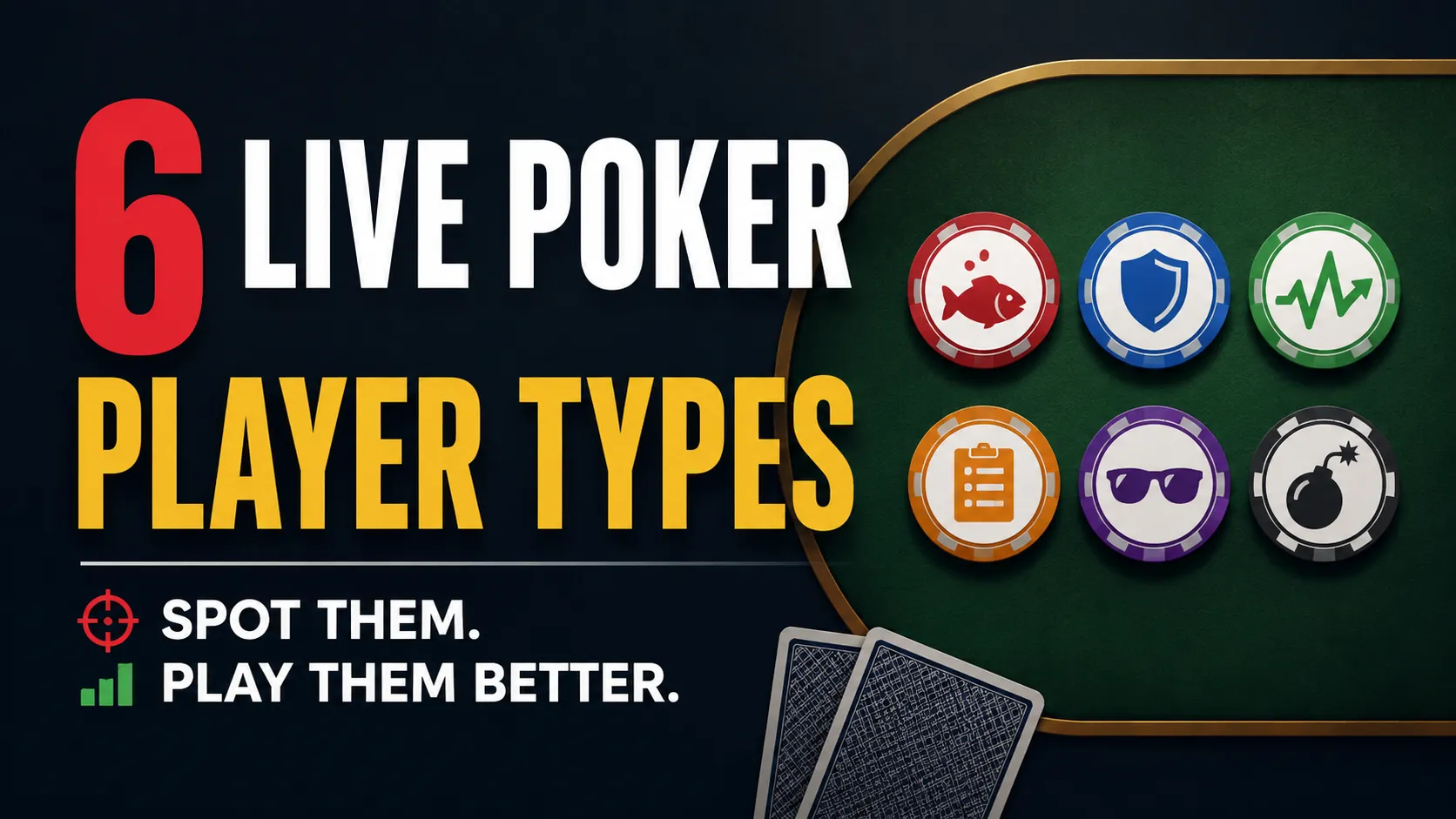
The fastest way to make better decisions in live poker is to figure out who is making which mistake.
One player calls too much. Another folds too much. Someone else attacks every sign of weakness. If you can identify those tendencies before the rest of the table does, many otherwise difficult decisions become much easier.
Live poker also gives you information that online poker cannot. You can see who limps into nearly every pot, who has barely played a hand for an hour, who keeps calling large bets with marginal holdings, and who repeatedly applies pressure when the action checks to them. You also get timing, table talk, bet sizing and physical behavior to consider.
The mistake is assuming that appearance tells you how someone plays.
A hoodie does not make someone aggressive. Age does not make someone tight. A player with an expensive watch is not automatically reckless. Those shortcuts may feel convenient, but they can lead you into exactly the wrong adjustment.
A better approach is to classify players by what they repeatedly do at the table.
The six live poker player types below are not permanent identities. Think of them as working profiles. Observe the pattern, make an initial adjustment, then keep updating your read as new hands reach showdown.
Live Poker Player Types at a Glance
| Player Type | Main Leak | Best Initial Adjustment |
|---|---|---|
| Limp-Caller | Enters too many pots passively | Isolate selectively, especially in position |
| Calling Station | Calls too often | Bluff less and value bet thinner |
| Nit | Folds too much | Steal more and respect unusual aggression |
| Over-Aggressor | Bets and raises too often | Continue wider when the evidence supports it |
| Splashy Action Player | Plays too many hands | Identify whether the main leak is calling or raising |
| Competent Aggressive Regular | No obvious major leak | Avoid forcing an exploit without evidence |
These profiles can also overlap. A player might limp too much preflop, call too much on the flop and still become unusually aggressive on later streets. The label matters less than identifying the specific mistake you can exploit.
1. The Limp-Caller
You will not need long to notice the Limp-Caller.
They enter plenty of pots but rarely open-raise. Someone raises after they limp and they call. Another player joins and they call again. Before long, a pot that could have been heads-up has four or five players seeing the flop.
The defining feature is not simply that they limp. It is the combination of frequent limping, loose preflop calls and limited aggression.
How to Play Against a Limp-Caller
When you have position and a hand that performs well against a wide calling range, isolation raises become attractive.
The goal is not to punish limping for its own sake. You are trying to create a pot against a player who is entering with many hands and may have to play the rest of the hand out of position.
That does not mean isolating with any two cards. If several players behind you also love calling, a speculative isolation raise can simply create a bloated multiway pot with a weak hand.
Pay attention to what happens after the flop too. Some Limp-Callers play fit-or-fold and give up quickly when they miss. Others limp preflop but turn into Calling Stations once they connect with the board. Those opponents require very different postflop plans.
Best adjustment: Isolate more often with position and a range that benefits from playing against their loose preflop calls, but account for the players still left to act.
2. The Calling Station
The Calling Station is one of the easiest player types to recognize and one of the easiest to misplay against.
This opponent tends to call far too often.
They may call flop bets with weak pairs, continue with questionable draws and reach the river with holdings that many other players would have released earlier. Their range can remain surprisingly wide because calling does not narrow it as much as it would against a tighter opponent.
Loose-passive players are generally characterized by playing many hands while preferring calls to bets and raises. Against opponents who demonstrably call too often, the basic exploit is straightforward: reduce bluffs and extract more value from made hands.
How to Play Against a Calling Station
Trying to make a player fold when their biggest mistake is not folding enough is fighting the wrong battle.
Bluff less.
Value bet more.
And do not automatically check back every medium-strength hand just because it would feel uncomfortable to face a raise.
When a player repeatedly calls with worse, some hands that would be marginal value bets against a stronger opponent can become profitable bets. Strong hands may also support larger sizing when that particular opponent has shown a willingness to call those sizes with weaker holdings.
There is one important warning.
A passive player suddenly raising is not the same thing as a passive player calling. Someone can call far too wide and still have an extremely strong raising range.
Do not interpret "Calling Station" as "always weak."
Best adjustment: Reduce low-equity bluffs, look for thinner value and take unusual aggression seriously until you have evidence that their raising range is loose too.
3. The Nit
The Nit gives up pots other players would fight for.
They play few starting hands, defend their blinds selectively and rarely seem interested in marginal situations. Long stretches can pass without them committing meaningful chips.
Forget the stereotype that this player has to be older, quiet or reading a newspaper. A nit can be 22 years old and wearing headphones.
What matters is the range.
If repeated action shows that someone folds substantially more often than the rest of the table and enters pots with a narrow range, you can begin exploiting that tendency.
How to Play Against a Nit
When tight players are behind you, stealing becomes more attractive because there is less risk of resistance.
Their blinds can become useful targets. Marginal opens may become better when the players still to act are unwilling to defend enough.
But the second half of the adjustment is just as important.
When a player who has spent an hour avoiding big pots suddenly 3-bets, 4-bets or applies heavy pressure, do not respond as though you are facing the table's most aggressive player.
Ranges change with actions.
A useful profile tells you what an action is likely to mean. It does not give you permission to ignore it.
Best adjustment: Attack the pots they surrender too easily, then tighten your continuing range when their unusually strong aggression appears.
4. The Over-Aggressor
Some players do not need much encouragement to bet.
They 3-bet more frequently than the table, attack checks, raise flops, fire multiple streets and create uncomfortable decisions with ranges that extend well beyond premium hands.
This is the player who can make an otherwise quiet live table feel chaotic.
The biggest mistake against them is becoming so frustrated by their aggression that you start fighting back simply to prove they cannot push you around.
Poker does not award points for standing your ground.
How to Play Against an Over-Aggressor
If the aggression really is excessive, your response should come from their range being too wide, not from emotion.
That can mean continuing against bets with more bluff-catchers than you would against a passive opponent. It can also mean allowing strong hands to remain in their betting range rather than automatically raising and giving them the opportunity to escape.
At the same time, distinguish frequent aggression from reckless aggression.
A competent aggressive regular can 3-bet, barrel and bluff at healthy frequencies without actually giving you an easy exploit. One aggressive hand is certainly not enough evidence to label somebody a maniac.
Best adjustment: Defend appropriately against excessive pressure and give their bluffs room to continue, but do not turn every marginal hand into a personal battle.
5. The Splashy Action Player
This player wants to play pots.
They open wide, call raises with unusual holdings and are comfortable building pots with hands that more selective opponents would fold preflop. Showdowns can reveal just how far outside conventional starting ranges they are willing to go.
This is where old-school live poker advice often starts guessing about personality, money or occupation.
None of that is necessary.
If a player has shown you that they enter too many pots and continue too widely, you already have useful strategic information.
How to Play Against a Splashy Action Player
First determine how they are playing too many hands.
A splashy player who calls everything requires a different response from one who raises everything.
Against the first, your strategy begins to resemble the Calling Station adjustment: prioritize value and avoid ambitious bluffs that depend heavily on fold equity.
Against the second, stronger bluff-catching ranges and traps can become more relevant.
You may also be able to use larger value-oriented preflop sizes when a particular opponent has demonstrated that they will call those sizes with dominated or otherwise weak holdings.
The important part is that the adjustment comes from observed behavior rather than image.
Best adjustment: Find out whether their main leak is entering too wide, calling too wide or raising too wide, then attack that specific mistake.
6. The Competent Aggressive Regular
Not everyone at a live table is waiting to be easily exploited.
A capable regular may open sensible ranges, 3-bet hands other than premiums, understand position, identify weaker players and vary their lines enough that you cannot confidently assign them a hand after one bet.
They can look similar to the Over-Aggressor at first.
The difference appears after you collect more information.
Their aggression makes sense.
When enough hands reach showdown, you may see both value and bluffs. Their sizing is not obviously tied to hand strength. They react to what the table is doing rather than repeating the same mistake regardless of the opponent.
How to Play Against a Strong Regular
Do not invent an exploit because you feel obligated to have one.
Against players whose leaks are not yet clear, a fundamentally sound strategy is often better than making a large adjustment from weak evidence.
Position also matters more than ego.
If a tough aggressive player is immediately to your left while a much weaker opponent is on your right, there is little reason to create unnecessary marginal battles with the strongest player at the table.
Keep observing.
Even strong players have tendencies, but some require much more evidence before the profitable counter-strategy becomes obvious.
Best adjustment: Stay disciplined, avoid unsupported assumptions and look for specific deviations before moving far away from your normal strategy.
How to Identify a Live Poker Player Type Without Guessing
Putting someone into one of these categories should be the end of an observation process, not the beginning.
A useful player profile can be built in four stages.
Start With Preflop Frequency
Watch who is entering pots and how they enter them.
Are they limping? Open-raising? Cold-calling? 3-betting? Folding their blinds?
You will not have exact HUD statistics, but noticeable differences can emerge relatively quickly at a live table.
The important point is not to attach a label after one orbit. You are looking for repeated tendencies.
Pay Attention to Showdowns
Showdowns are some of the best free information you will receive.
If someone calls a large river bet and turns over third pair, remember it. If someone 3-bets several times and the hands that reach showdown are consistently strong, remember that too.
A revealed hand gives context to every action that came before it.
That information is much more useful than guessing based on someone's clothing or table personality.
Look for Repeated Patterns
One strange hand proves very little.
A player might limp aces once. A normally tight opponent might run a bluff. A strong regular might make a terrible call.
The read becomes useful when the same tendency appears repeatedly.
This also prevents one of the most common live poker mistakes: building an entire strategy around a single memorable showdown.
Treat Physical Tells as Supporting Evidence
Live poker does offer information that online players never see: speech, timing, posture, chip handling and changes in behavior.
But these signals work best in context.
A physical tell becomes more useful when you know what that player normally looks like and can identify a meaningful deviation from their baseline. One isolated gesture should rarely outweigh betting history, range construction and revealed hands.
In practical terms, a player's betting actions usually tell you more than whether they suddenly scratch their nose.
Do Not Confuse a Read With a Fact
There is an important difference between saying:
"This player is a Calling Station."
and:
"This player has called three large bets with weak made hands, so I currently expect their calling range to be wider than normal."
The second thought is much more useful.
It identifies the evidence, describes the likely deviation and leaves room for the read to change.
That is how strong live poker profiling should work.
Your initial read is a hypothesis, not a verdict.
Player Types Are Starting Points, Not Rules
The most valuable skill in live poker is not memorizing six labels.
It is updating them.
The player you identified as a Calling Station may turn out to be passive preflop but highly aggressive on rivers. The apparent Nit may simply have been card-dead for an hour. The player firing three barrels may be a strong regular rather than an out-of-control bluffer.
Good exploitative poker is a feedback loop:
Observe. Form a read. Adjust. Look for new evidence. Adjust again.
That is also why profiling players by age, clothing, occupation or personality is unnecessary. Those details may be memorable, but they are weak substitutes for actual poker evidence.
Watch what your opponents repeatedly do with their hands, especially when those hands reach showdown. Once you understand which mistake a player is actually making, deciding how to exploit it becomes much easier.
新手完整攻略:發牌規則、計分系統與夢幻天地觸發條件全解析_EN.webp)